Brian Riddell

Penis Size means nothing

What studies show about penis size in the UK

Large clinical studies give a consistent picture of typical size ranges for British men. A major medical review analysing over 15,000 men worldwide found an average erect length of about 5.2 inches (13.24 cm) and an average erect girth of 4.59 inches (11.66 cm), and these figures apply broadly across regions, including the UK Moorgate Andrology. UK‑specific studies confirm this, showing an average erect length of around 5 inches and a girth of around 4.5 inches Moorgate Andrology. International comparisons place the UK close to the global middle, with an average erect length of 14.30 cm (5.6 inches) World Population Review. England‑focused data aligns closely, reporting an average erect length of 5.16 inches (13.1 cm) and girth of 4.59 inches (11.66 cm) supremepenis.com.

Across all sources, the pattern is steady: British men sit comfortably within global norms.


Why size anxiety persists

Even with clear data, many men still worry about size. Research points to a few common drivers:

  • Pornography creates unrealistic baselines by showcasing men with above‑average anatomy.
  • Changing‑room comparisons can distort perception, especially when glimpses are brief and out of context.
  • Partner expectations are often imagined rather than real; surveys show most women prioritise connection, communication, and comfort over size.
  • Cultural myths continue to frame size as a measure of masculinity, despite no evidence linking size to sexual satisfaction.

These pressures shape how men feel about their bodies more than the numbers themselves.


How naturism reframes the conversation

Naturism offers a radically healthier lens on all of this. When you spend time in naturist spaces, you see—really see—how diverse bodies are. That diversity becomes normal, not something to hide or judge.

Naturism helps dissolve size anxiety in a few powerful ways:

  • Normalisation through visibility — When you see hundreds of real bodies, you realise how wide the natural range truly is.
  • Body acceptance over comparison — Naturism emphasises comfort, authenticity, and presence, not measurement.
  • Desexualised nudity — In a naturist setting, a penis is just another body part, not a performance tool or status symbol.
  • Community reassurance — Naturists tend to be open, supportive, and grounded, which helps dismantle shame.

For many men, naturism becomes the first environment where they feel genuinely at ease with their own anatomy.


What partners actually value

Studies across the UK show that most women care far more about emotional connection, communication, and mutual pleasure than about size. While some express mild preferences, very few consider size a decisive factor in satisfaction. Confidence, kindness, and attentiveness consistently rank higher than anatomy.

This aligns perfectly with naturist values: intimacy is about presence, trust, and shared experience—not centimetres.


A healthier, naturist‑aligned perspective

Understanding the data helps, but naturism goes further by shifting the entire frame:

  • Bodies aren’t competitions.
  • Variation is natural and expected.
  • Comfort in your own skin is more attractive than any measurement.
  • Shame dissolves when nudity is normalised.

For many naturists, the moment they stop worrying about size is the moment they start enjoying their bodies—and their relationships—more fully.


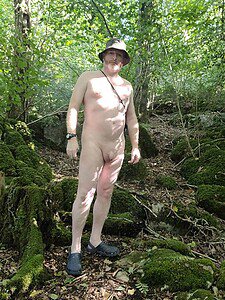
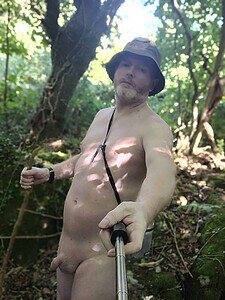
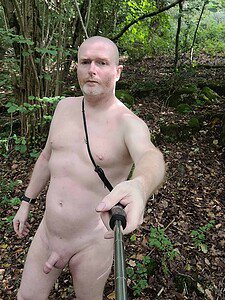
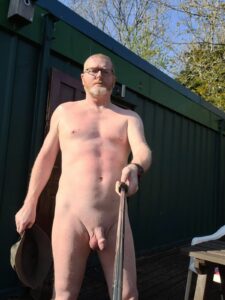
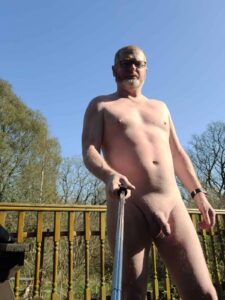
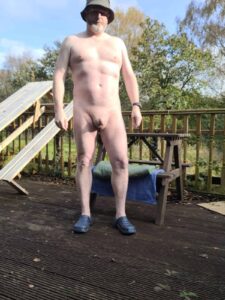
As you will see in the pics and videos in my gallery,
My penis varies between tiny and semi-erect,
It is nothing sexual. Just my penis doing what it does (erections are not always sexual)
When fully erect, it is about 14.30 cm (5.6 inches).
So I’m just an average UK size 😀 and that is ok.
Penis size does not determine manliness; behaviour does.

Don’t worry about your size. It means nothing
Be honest with yourself and everyone else
Main Gallery
Share This

Clothing Optional

🌞 Why Humans Wear Clothing When No Other Animals Do

…and why naturism helps us remember what the body was never meant to forget

Spend a moment watching the natural world and you’ll notice something quietly profound. Every animal—every bird, every mammal, every creature that walks, swims, or soars—moves through life in the body it was born with. No shame. No strategic covering. No “Oops, I forgot my trousers.”

Just being.

Humans, though? We’re the outliers. We’re the only species that routinely hides itself under layers of fabric, rules, and meaning. We’re the only ones who treat the body as something that must be managed, edited, or justified.

Naturism doesn’t just question that—it gently exposes how strange it is.

Because if no other animal needs clothing to be acceptable, dignified, or “appropriate,” why do we?

Let’s take the long, honest walk through that question.


🌍 1. Clothing Began as Survival, Not Modesty

The earliest humans didn’t cover up because they were embarrassed. They covered up because they were cold.

As our ancestors migrated into harsher climates, they needed protection:

  • against freezing winds
  • against scorching sun
  • against rough terrain
  • against insects and thorns

Clothing was a tool—no different from fire, shelter, or stone blades. It was practical, functional, and entirely free of moral weight.

Naturism remembers this. It treats clothing as equipment, not identity. A jacket is no more a statement about your worth than a pair of shoes is a commentary on your soul.


🧠 2. Then Clothing Became a Social Language

Humans are storytellers. We love symbols. We love signalling who we are, what we value, and where we belong.

Clothing became a shortcut for all of that:

  • tribe
  • status
  • profession
  • wealth
  • gender roles
  • religious identity
  • cultural belonging

But here’s the key: none of this has anything to do with the body itself. It’s all external meaning layered onto a neutral, natural form.

Naturism steps outside that symbolic system. It says, “Let’s meet each other without the costumes.” And that’s why naturist spaces feel so startlingly equal—because the usual visual hierarchies evaporate.

Without clothing, you can’t instantly sort people into categories. You meet the person, not the performance.


🙈 3. Eventually, Clothing Became a Moral Cage

This is where things took a turn.

At some point, societies began treating the body—especially certain parts of it—as dangerous, shameful, or morally loaded. Not because of biology, but because of belief.

Cultures invented:

  • modesty rules
  • “forbidden” skin
  • dress codes
  • purity standards
  • sexual panic over anatomy
  • the idea that nudity equals indecency

And then we forgot we invented them.

We started teaching children that their bodies were embarrassing. We built entire legal systems around hiding skin. We acted as though the human body was a threat that needed constant containment.

No other animal lives under that burden.

Naturism challenges this cultural amnesia. It doesn’t reject clothing—it rejects the idea that the body is a problem.


🌱 4. Naturism Is the Reset Button We Didn’t Know We Needed

Naturism isn’t about nudity for nudity’s sake. It’s about clarity. It’s about remembering what the body is when you strip away centuries of fear and symbolism.

Naturism says:

  • The body is normal.
  • Nudity is neutral.
  • Shame is learned.
  • Confidence grows when you stop hiding.
  • Community deepens when everyone shows up as they are.
  • Equality flourishes when status symbols disappear.
  • Sexuality becomes healthier when the body isn’t taboo.

Naturism doesn’t ask humans to behave like animals. It asks humans to stop pretending they’re the only species whose bodies require constant censorship.

It’s not regression—it’s restoration.


🌿 5. The Body Was Never the Problem

One of the most liberating truths naturism offers is this:

The human body has never been the issue. The stories we attach to it are.

We inherited centuries of cultural baggage:

  • the idea that nudity is inherently sexual
  • the belief that certain body parts are “dirty”
  • the fear that seeing a body will corrupt someone
  • the assumption that modesty equals morality

Naturism gently dismantles these myths by doing something radical in its simplicity: it treats the body as a body.

Not a scandal.
Not a symbol.
Not a threat.
Not a temptation.
Not a moral test.

Just a body.

And when you see bodies treated that way—your own and others’—something shifts. Something heals. Something returns to its natural state.


🌞 6. So Why Do Humans Wear Clothing?

Because we’re clever.
Because we’re expressive.
Because we’re social.
Because we’re anxious.
Because we’re symbolic.
Because we’re complicated.

But naturism reminds us of something deeper:

Clothing is optional. Humanity is not.

We’re the only species that covers itself—but we’re also the only species capable of consciously choosing when not to. And that choice can be grounding, liberating, and profoundly human.

Naturism doesn’t reject clothing. It rejects the idea that we must hide to be acceptable.

It invites us back into our own skin.

It reminds us that the body is not the enemy.

It reconnects us with the simplest truth in the natural world:

We were born unclothed. We were not born ashamed.

Share This