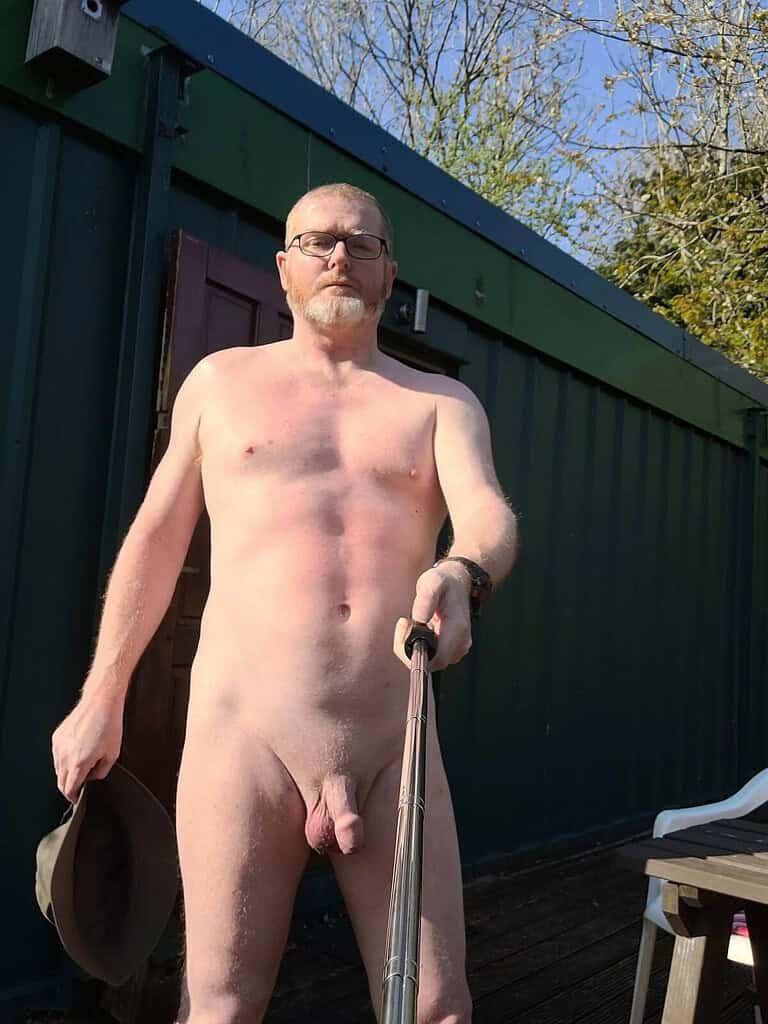
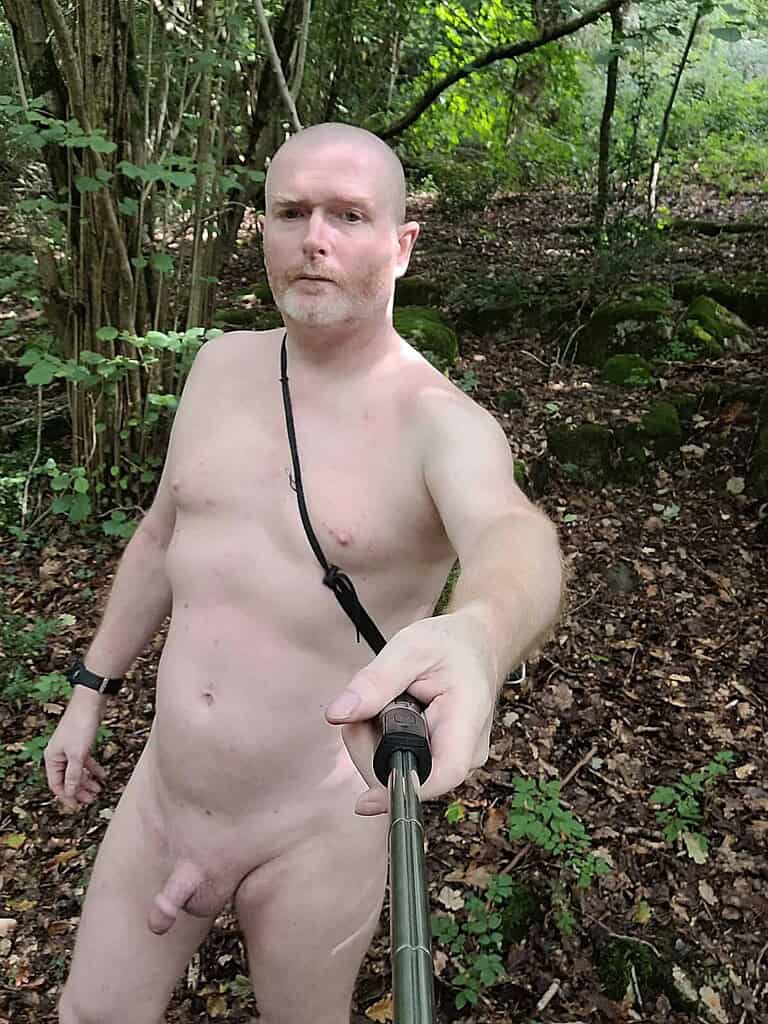
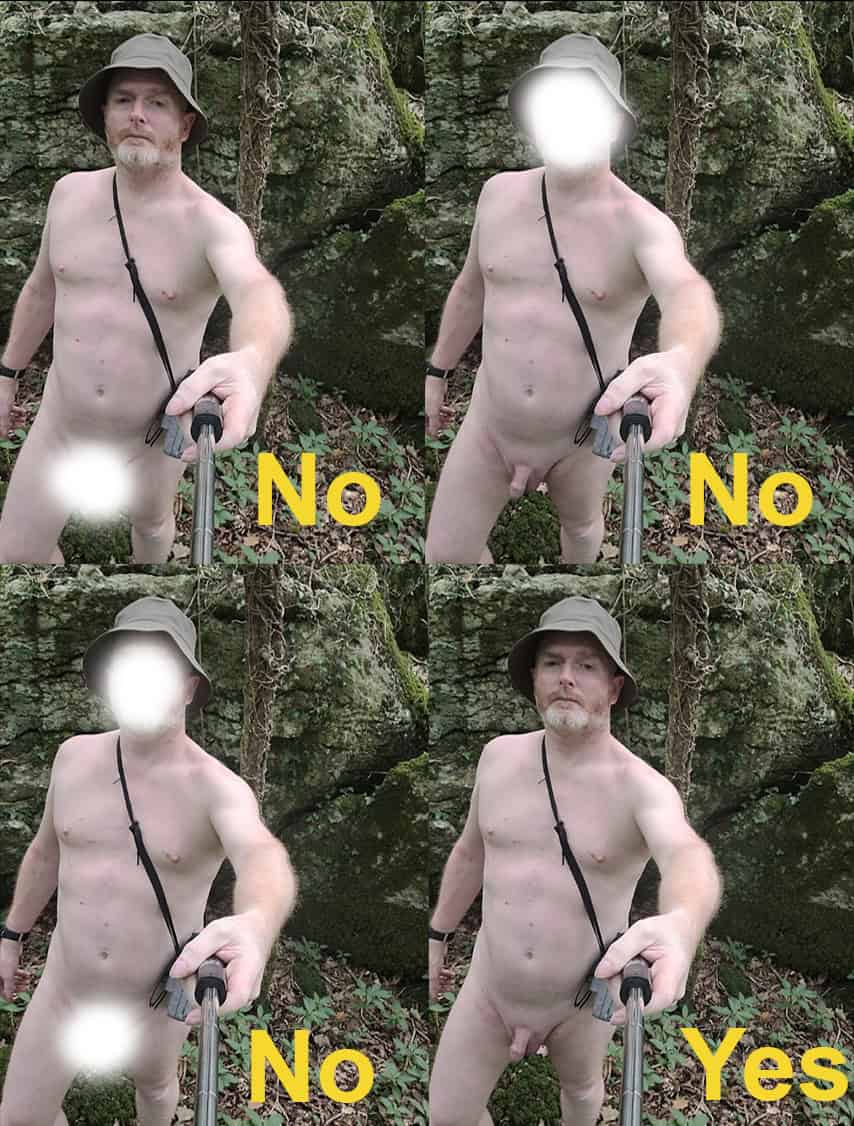
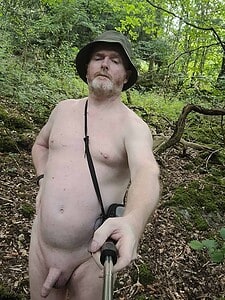
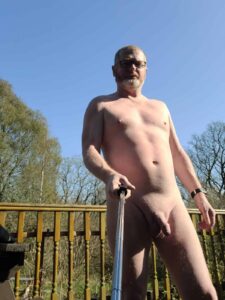
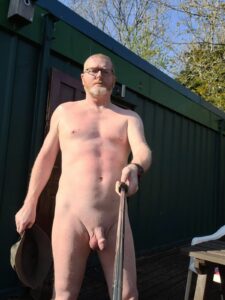
I have been a naturist since my teens, but I kept it hidden for a long time, and now I feel like I’m ready to go public.
When I was younger (maybe at the late stages of puberty, 15-17), I started to feel like I was more comfortable when I was naked, but at that time, I was very shy and not confident at all, so I hid my naturist side.
I would only be naked when nobody else was in the house, and there were a few times when I almost got caught and had to run through the house and up the stairs to my room.
For a long time, I would only be naked in the house alone. In my early 30’s I plucked up the courage to go to a nearby beach that I had read online was an unofficial naturist beach, still on my own.
Now, in my 50’s I have finally joined a naturist club where I am happy to say I practice naturism with other naturists
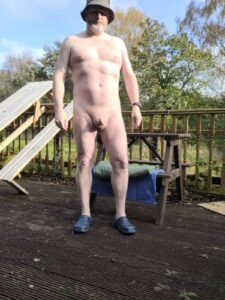
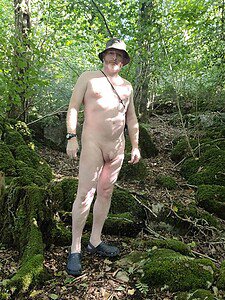
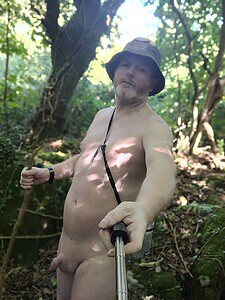
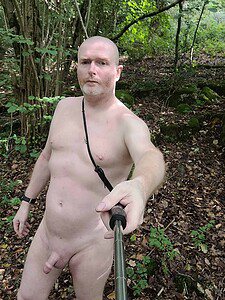
Over the years, I have taken many photos of myself. I will post some of them here over the next few days and then post new ones as I take them
Everyone has their own reasons for practising naturism, and sometimes it is difficult to describe, but I’m going to try.
In the beginning, I suppose it was probably a puberty thing. I was a late bloomer, and around 16-19 years old, so my body had been changing, and I began to feel excited about my new adult body.
I would be naked as much as possible, and over time, I became comfortable this way. Wearing clothes felt heavy and restrictive, but I was a very shy person, and my self-confidence around others was low, so I hid my naturist side.
Over time, naturism has become more about honesty and being natural, like every other creature.
Honesty By being naked and seeing myself naked, I have become more honest with myself about who I am.
I am definitely not a male model. I am not ripped or overweight, but somewhere in between, maybe I will say sturdy.
My penis is average by UK standards, which is fine. Penis size does not define a man. Character is way more important.
I’m ginger-haired, which was a rare thing when I was young, and I was often made fun of because of it.
This led to the shyness and lack of confidence mentioned earlier. By being naked a lot, I grew more accepting of my hair colour, whether it be on my head or other parts of my body, it really didn’t matter.
I am just an average person and don’t pretend to be any better than I am. I definitely don’t pretend to be better than other people. Naturism has taught me that without clothing, we are all equal.
Natural Every other creature on Earth lives naked, and it has no negative effect on them. They live through all kinds of weather and environmental conditions without problems. We like to think we are above them, but biologically, we are the same. Our body has its own heating and cooling system, and it adapts to whatever is around us. Clothing gets in the way of this system, making us soft and disconnecting us from the planet around us. Naturism has shown me that my naked body is quite capable of being warm in winter and cool in summer, and my skin has grown stronger where needed to protect itself. Clothing is mostly unnecessary.
Current day Me Now I am in my 50’s and my shyness is gone. I’m still not much of a talker, but I am confident about myself, who I am and what I can do.
I am ready to be honest and stop hiding my naturist side, and I am happy for people to see me just as I am.
Why Naturists Hide — And Why Coming Out Matters More Than You Think
For a philosophy built on honesty, comfort, and body‑acceptance, naturists spend a surprising amount of time hiding. Not from nature, not from themselves, but from the world around them. And it’s not because naturism is shameful — it’s because the world has been taught to misunderstand it.
If you’ve ever felt the tension between living authentically and keeping your naturism private, you’re not alone. Many naturists wrestle with the same questions: Should I tell people? Will they judge me? Will it change how they see me? Let’s unpack why this happens, what’s at stake, and why stepping into the open — even just a little — can be more powerful than you realise.
Why Naturists Hide
1. Misconceptions About Nudity
The biggest reason naturists stay quiet is simple: most people still equate nudity with sex. Naturism challenges that assumption, but society has spent centuries reinforcing it. When people hear “I’m a naturist,” they often hear something entirely different — and naturists know it.
2. Fear of Social Judgment
Naturists aren’t afraid of their bodies. They’re afraid of being misunderstood. Friends, colleagues, or family might jump to conclusions, make jokes, or treat them differently. Even mild reactions can feel discouraging.
3. Professional Consequences
Some naturists work in fields where reputation is everything — teaching, healthcare, public service, and leadership roles. Even though naturism is legal and ethical, people worry that a single misinformed opinion could affect their career.
4. Cultural and Religious Conditioning
Many of us grew up hearing that the body is something to hide, control, or be ashamed of. Naturism flips that script, but the old messages don’t disappear overnight. Hiding often feels safer than challenging deeply rooted norms.
5. Protecting Peace
Sometimes, staying quiet isn’t about fear — it’s about avoiding unnecessary drama. Naturists often choose privacy simply because they don’t want to spend their lives explaining themselves.
The Pros of Coming Out as a Naturist
1. Living Authentically
There’s a real freedom in saying, “This is who I am.” No more dodging questions, hiding photos, or pretending your weekends at the beach were “just hiking.”
2. Reducing Shame — For Yourself and Others
When you speak openly about naturism, you help dismantle the shame culture around bodies. You become a quiet, powerful example that nudity can be normal, healthy, and non‑sexual.
3. Building Community
Coming out often leads to unexpected connections. People you never suspected — neighbours, coworkers, friends — may reveal that they’re naturists too, or at least curious and supportive.
4. Advocacy Through Visibility
Every naturist who speaks openly helps shift public perception. Visibility normalises. Silence preserves stigma.
5. Emotional Relief
Hiding any part of your identity takes energy. Coming out can feel like dropping a weight you didn’t realise you were carrying.
6. Being Counted
This is the part many naturists underestimate. When you come out — even to one person — you add to the real, visible number of ordinary people who live this way. Every naturist who steps forward makes it easier for the next one. Movements grow because people choose to be seen.
The Cons of Coming Out as a Naturist
1. Misunderstanding and Stereotypes
Even well‑meaning people may not “get it” at first. You might have to explain, clarify, and correct assumptions more than you’d like.
2. Social Awkwardness
Some people may joke, tease, or act uncomfortable. It’s rarely malicious — but it can be tiring.
3. Professional Risks
While naturism is legal, not everyone reacts rationally. A colleague’s raised eyebrow or a manager’s discomfort can create subtle tension.
4. Family Dynamics
Family members may project their own insecurities or beliefs onto your lifestyle. Sometimes the hardest conversations aren’t with strangers — they’re with the people closest to you.
5. Loss of Privacy
Once you’re open, you can’t fully “un‑open” the door. People may ask questions, make assumptions, or bring it up unexpectedly.
So… Should You Come Out?
There’s no universal answer. Naturism is about freedom, not pressure — and that includes the freedom to share or stay private.
But here’s the truth that many naturists quietly discover:
If you wait for the world to be ready, you’ll wait forever. If you wait for yourself to be ready, you might wait just as long.
Sometimes the moment to step forward isn’t when everything feels safe — it’s when you realise you’re tired of shrinking.
Coming out doesn’t have to be dramatic. It can be a single conversation. A casual mention. A small truth shared with someone you trust.
And each time a naturist chooses visibility, the world becomes a little more honest, a little more open, and a little less afraid of the human body.
Final Thought: Be Counted, Even Quietly
Naturists hide not because naturism is shameful, but because society hasn’t caught up yet. But society won’t catch up unless naturists exist in the open — not all at once, not loudly, but steadily.
You don’t have to shout it from the rooftops. You don’t have to post it online. You don’t have to tell everyone.
But telling someone — being counted, even in a small way — is how change begins.
Your naturism is valid. Your voice matters. And the world needs more people who live comfortably in their own skin. Here is a great article on a similar topic
Erections: A Natural Body Response, Not Always a Sexual One
Many male naturists worry about their first time visiting a naturist beach or club, and their main concern is “What if I get an erection?” Well, the answer is, you probably won’t because of nerves on the day, and if you do, it doesn’t really matter. Just be aware of the people around you and cover up or hide it if you think it necessary. As long as you are not intentionally waving it at people, you should be ok
For many people, the topic of erections comes wrapped in embarrassment, jokes, or assumptions about desire. But the truth is far simpler: an erection is a normal physiological reaction, and it doesn’t always have anything to do with sexual thoughts or intentions.
Erections can happen for many reasons—changes in temperature, physical movement, relaxation, stress release, or even just the body’s internal rhythms. The nervous system and circulatory system are constantly adjusting, and sometimes that results in increased blood flow to the penis. It’s a sign that the body is functioning as it should.
In everyday life, this can feel awkward because society tends to treat any visible sexual anatomy as inherently sexual. But in reality, the body doesn’t follow those cultural rules. It responds to biology, not social expectations.
In naturist spaces, this understanding becomes especially important. Naturism encourages people to see the body as it is—without shame, without assumptions, and without attaching meaning to every natural response. An erection in a non‑sexual context isn’t a statement or an invitation; it’s simply a momentary physical state. Most naturist communities treat it with calm practicality: take a breath, shift your posture, or give your body a moment to settle. No drama, no judgement.
Normalising this perspective helps reduce anxiety and promotes healthier body awareness. When we stop treating natural functions as taboo, we make room for comfort, confidence, and respect—both for ourselves and for others.
Erections are part of being human. They don’t always signal desire, and they don’t need to be a source of shame. Understanding that truth is a step toward a more relaxed, honest relationship with our own bodies.
I never get fully erect in a naturist setting, but sometimes penises have a mind of their own, and that is totally natural. When I’m taking photos or recording videos of myself, I am aware that I am naked and that people will see every bit of me, and some excitement is present, but it’s not sexual excitement. It is excitement about being seen as I am… as a whole person An erection isn’t always sexual.
The penis is never truly still — it’s a dynamic, responsive organ that shifts throughout the day as part of normal physiology. Its tissues subtly expand and contract with temperature changes, blood flow, arousal, stress, and even simple movements like walking or sitting. These small adjustments in shape, angle, and size are automatic, healthy, and continuous, reflecting the body’s moment‑to‑moment balance of circulation, muscle tone, and environment.
Large clinical studies give a consistent picture of typical size ranges for British men. A major medical review analysing over 15,000 men worldwide found an average erect length of about 5.2 inches (13.24 cm) and an average erect girth of 4.59 inches (11.66 cm), and these figures apply broadly across regions, including the UK Moorgate Andrology. UK‑specific studies confirm this, showing an average erect length of around 5 inches and a girth of around 4.5 inchesMoorgate Andrology. International comparisons place the UK close to the global middle, with an average erect length of 14.30 cm (5.6 inches)World Population Review. England‑focused data aligns closely, reporting an average erect length of 5.16 inches (13.1 cm) and girth of 4.59 inches (11.66 cm)supremepenis.com.
Across all sources, the pattern is steady: British men sit comfortably within global norms.
Why size anxiety persists
Even with clear data, many men still worry about size. Research points to a few common drivers:
Pornography creates unrealistic baselines by showcasing men with above‑average anatomy.
Changing‑room comparisons can distort perception, especially when glimpses are brief and out of context.
Partner expectations are often imagined rather than real; surveys show most women prioritise connection, communication, and comfort over size.
Cultural myths continue to frame size as a measure of masculinity, despite no evidence linking size to sexual satisfaction.
These pressures shape how men feel about their bodies more than the numbers themselves.
How naturism reframes the conversation
Naturism offers a radically healthier lens on all of this. When you spend time in naturist spaces, you see—really see—how diverse bodies are. That diversity becomes normal, not something to hide or judge.
Naturism helps dissolve size anxiety in a few powerful ways:
Normalisation through visibility — When you see hundreds of real bodies, you realise how wide the natural range truly is.
Body acceptance over comparison — Naturism emphasises comfort, authenticity, and presence, not measurement.
Desexualised nudity — In a naturist setting, a penis is just another body part, not a performance tool or status symbol.
Community reassurance — Naturists tend to be open, supportive, and grounded, which helps dismantle shame.
For many men, naturism becomes the first environment where they feel genuinely at ease with their own anatomy.
What partners actually value
Studies across the UK show that most women care far more about emotional connection, communication, and mutual pleasure than about size. While some express mild preferences, very few consider size a decisive factor in satisfaction. Confidence, kindness, and attentiveness consistently rank higher than anatomy.
This aligns perfectly with naturist values: intimacy is about presence, trust, and shared experience—not centimetres.
A healthier, naturist‑aligned perspective
Understanding the data helps, but naturism goes further by shifting the entire frame:
Bodies aren’t competitions.
Variation is natural and expected.
Comfort in your own skin is more attractive than any measurement.
Shame dissolves when nudity is normalised.
For many naturists, the moment they stop worrying about size is the moment they start enjoying their bodies—and their relationships—more fully.
As you will see in the pics and videos in my gallery, My penis varies between tiny and semi-erect, It is nothing sexual. Just my penis doing what it does (erections are not always sexual) When fully erect, it is about 14.30 cm (5.6 inches). So I’m just an average UK size 😀 and that is ok. Penis size does not determine manliness; behaviour does.
Don’t worry about your size. It means nothing Be honest with yourself and everyone else
 Brian Riddell